


This article was featured in Maine Seniors Magazine, June 2022
Before anyone talks about financial planning and setting goals – we first want to think about what is most valuable to you. What are your values and what do you value? What do you stand for? Money in and of itself is not necessarily important – it’s what money or having money allows you to do for yourself and for others. Taking it to the next level – what motivates you? If you are not motivated to act, then the best plans in the world never get started. With the right motivation... almost anything can be achieved.
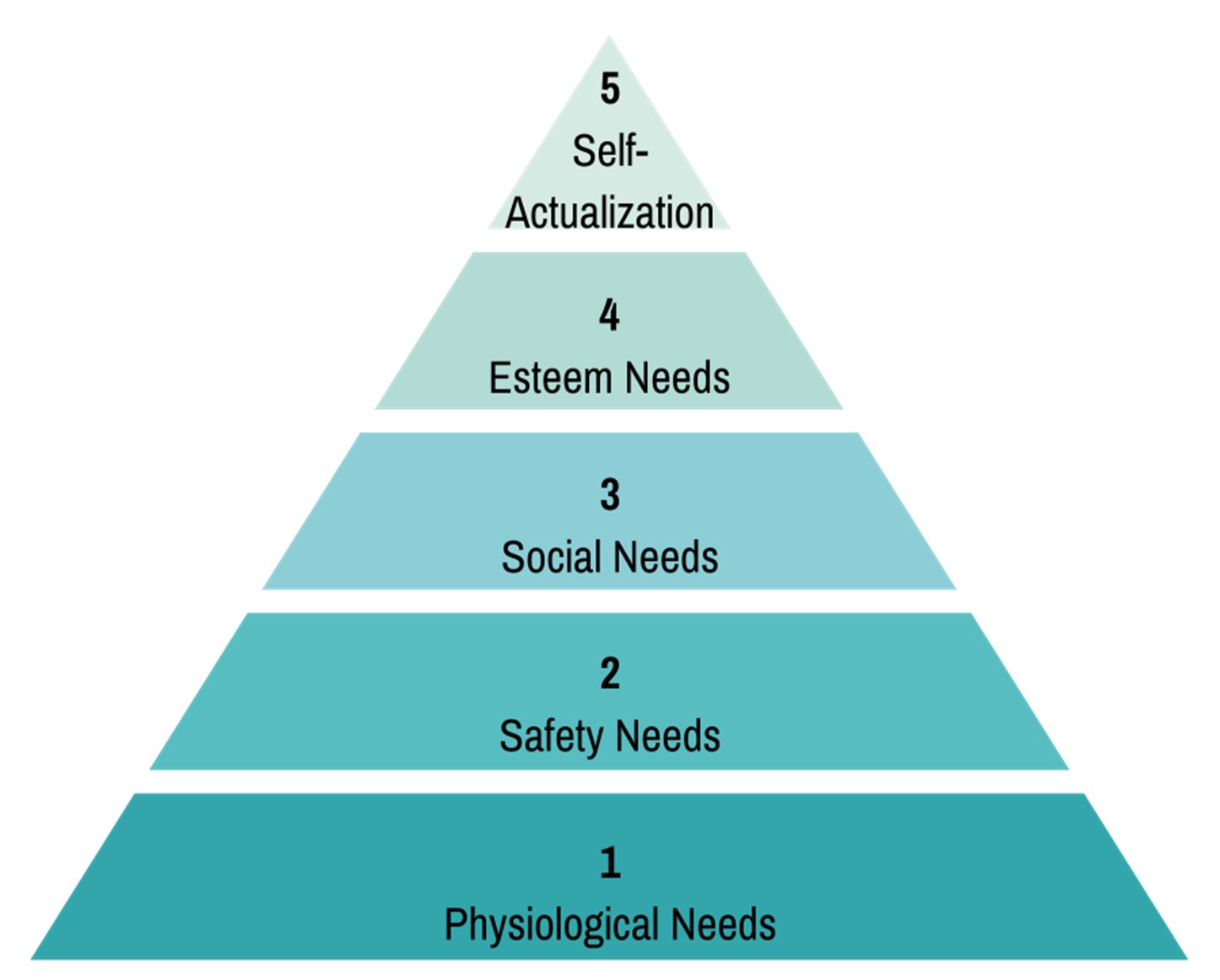
In 1943, Abraham Maslow published a paper called “A Theory of Human Motivation.” Commonly displayed as a pyramid, he stated that humans have five levels of needs. Starting at the base and moving upward are Physiological, Safety, Social, Esteem, and finally, at the top – Self-actualization.
Maslow used the hierarchy of needs to study how humans intrinsically partake in behavioral motivation. The first time I heard of this was in a graduate class in business management back in the early 1990s.
When meeting with new prospective clients, I like to start with the question, “what’s important about money to you?” This comes from some training that I took more than fifteen years ago from Bill Bachrach, who is a financial industry coach. He also has a book for individuals titled “Values-Based Financial Planning – the Art of Creating an Inspiring Financial Strategy.”
An example would be:
What’s important about money to you? Answer – having enough (independence). Then you might ask yourself what’s important about having enough – if I have enough, then I have the freedom to make choices. What’s important about having the freedom to make choices? I can choose to have more time with my family rather than work 80 hours a week. So, what you truly value is your family and having the ability to balance work and family life.
Once you know you will have the resources to spend more time with your family, is there anything else?
After balance, the person writes down a sense of accomplishment, then making a difference in other people’s lives, then being the best I can be, and finally, life has a purpose. Bachrach uses a staircase instead of the pyramid.
You are walking up the stairs to your ultimate values destination. In this case, the person valued their time with family and making a difference which ultimately gave their life purpose.
How much time do you want to spend with your family? How will you identify that you made a difference? A good financial plan sets the goals you need to realize your values and plan out how to pursue them in a manner that motivates you to get them done.
Behavioral finance is the study of the effects of psychology on investors and financial markets. It gets a lot of mention in today’s financial planning circles. It focuses on explaining why investors often appear to lack self-control, act against their own best interest, and make decisions based on personal biases instead of facts. By identifying a person’s values, we can often overcome some of those biases allowing us to set goals with specific timelines and steps to pursue them.
Securities and Advisory Services offered through LPL Financial, a Registered Investment Advisor. Member FINRA/SIPC